Navigate the Complex World of Visa Acquisition with Our Step-by-Step Guide
Embarking on the journey of hiring Central and Eastern European (CEE) IT professionals is an exciting venture for any US company. However, one integral aspect that can often be daunting is navigating the complexities of visa acquisition. That's why we've crafted this comprehensive guide to illuminate the path, tailored specifically for US companies. We aim to empower you with essential knowledge, making the process as smooth and stress-free as possible.
The Importance of Visa Understanding
Understanding visa requirements and processes is more than just a legal obligation; it is a cornerstone of successful international hiring. Misunderstanding or overlooking visa requirements can lead to setbacks, such as delays in onboarding, unexpected costs, and potential legal consequences. On the other hand, a thorough comprehension of visa requirements aids in better planning, facilitates a seamless recruitment process, and ensures compliance with immigration regulations. This not only helps you attract and retain top IT talent from the CEE region but also contributes to building a robust, diverse, and inclusive workforce.
Common Visa Types for IT Professionals
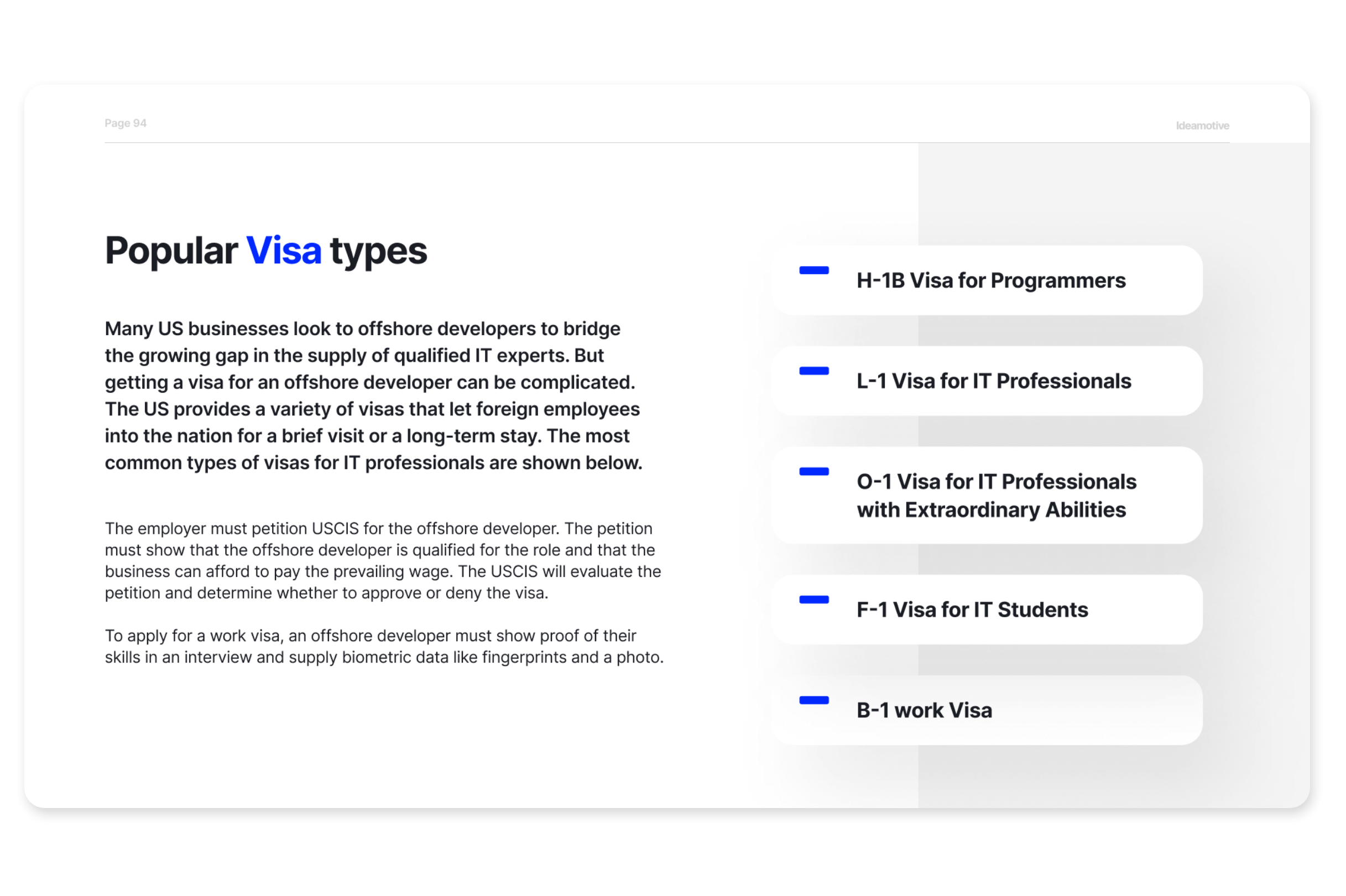
The US immigration system offers a range of work visa types, each serving different purposes and professions. For IT professionals from the CEE region, the most common are the H-1B, L-1, and E-2 visas. The H-1B visa, often called the 'specialty occupations' visa, is primarily for individuals in specialized fields like IT, engineering, and mathematics. The L-1 visa caters to intra-company transferees who are in managerial or executive roles or possess specialized knowledge. The E-2 visa, meanwhile, is for individuals or companies willing to make a substantial investment in a US business. Each visa type has unique qualifications and allows different kinds of work, and understanding these differences is crucial when recruiting overseas.
Visa Process: Step-by-step
Obtaining a visa is a multi-step process involving documentation, interviews, and fees. While specific steps vary between visa types, the typical process begins with the employer filing a petition with the United States Citizenship and Immigration Services (USCIS). Upon approval, the prospective employee applies for the visa at a US embassy or consulate in their home country. Following a successful interview, the visa is issued. It's important to note that the processing time can vary based on visa type and other factors, so early planning is recommended to avoid potential delays.
Petitioning for a Work Visa
As a US employer, it's your responsibility to petition for your prospective employee's work visa. This involves completing the appropriate form (usually Form I-129), providing necessary documentation, and paying the associated fees. The requirements may vary based on the visa type and the specific job role. For instance, an H-1B visa petition requires documentation that proves the job is a specialty occupation, while an L-1 visa petition would require proof of the manager's role or the employee's specialized knowledge.
Navigating Visa Extensions and Changes
Visas are generally issued for a certain period, after which they can be extended or changed depending on the visa type and circumstances. Visa extensions or changes of status require careful planning and adherence to specific rules. For example, H-1B visas are initially granted for up to three years and can be extended. However, job changes, promotions, or changes in employment conditions could potentially affect an employee's visa status. Therefore, understanding these nuances is crucial for maintaining compliance and avoiding any disruption in employment.
Staying Compliant
Once a visa has been issued, employers have ongoing responsibilities to ensure compliance with immigration rules. These can include maintaining appropriate records, paying the promised salary, and notifying USCIS of any significant changes in the terms of employment. Non-compliance can lead to serious consequences, including financial penalties, visa revocations, and potential bars from future hiring of foreign workers. By understanding and fulfilling these responsibilities, you can build a solid foundation for your company's international hiring strategy.
Conclusion: Your Roadmap to Visa Mastery
Understanding visa types and the acquisition process is a vital part of your journey to hiring CEE IT professionals. Armed with this knowledge, you can confidently navigate the intricacies of visa acquisition, ensuring a smooth and successful hiring process. We hope this guide provides you with a clear roadmap and sets you on the path to visa mastery.
Ready to conquer the complexities of visa acquisition and unlock the potential of CEE IT talent? Download our comprehensive e-book today to delve deeper into the world of visas and master the hiring process.
Valuable Discoveries
From The Handbook→
Beginning from January 1, 2023, the lowest permissible salary in Poland is PLN 3,490.00 (€760). Since this base salary is liable to change each year, it's imperative to stay updated with the most recent rates to provide fair pay to your employees.
Many tech firms lean on software developers and database architects, both are well-represented in H-1B visa professions. H-1B visas may occasionally be issued to system administrators and computer system analysts, but this isn't consistently the case.
Engaging with overseas contractors doesn't impose any reporting obligations for your US organization. However, it's important to have your contractors confirm their foreign status by submitting a Form W-8BEN or W-8BEN-E (for legal entities).
When operating with a team scattered across multiple time zones, it's vital to accommodate everyone's schedule. Below are a few tips for navigating time zone disparities: